Weekend Reading
What fresh hell is this? #Affordability #Incompetence #Corruption

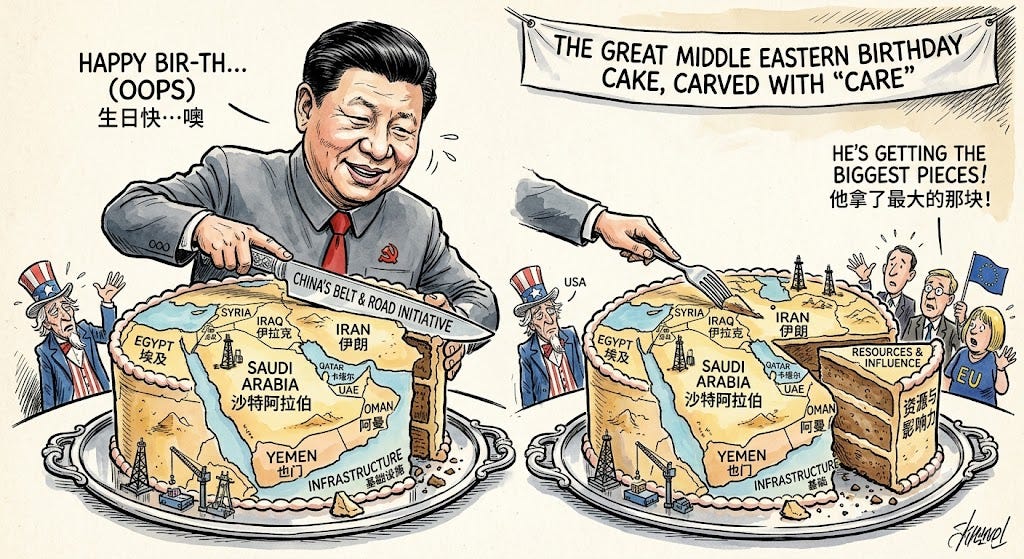
“The term ‘Middle East’ reflects the region’s historical centrality to Western powers. Popularized in 1902 by the U.S. naval strategist Alfred Thayer Mahan, it described the lands between Arabia and India, specifically to underscore their strategic importance to British imperial interests. So it was no surprise that the transfer of global supremacy from Britain to the United States after World War II played out most consequentially in the Middle East, its geopolitical center shifting from London’s colonial mandates to Washington’s Cold War and oil-security interests. The Middle East was soon incorporated into a U.S.-led order in which Washington provided military protection and underwrote the political conditions for the region’s integration into the global economy. The United States secured maritime trade routes, guaranteed energy flows, and anchored the dollar-based oil market. Oil revenues cycled through Western financial markets, regional economies oriented themselves toward U.S.-led globalization, and U.S. military power served as the ultimate guarantor of stability. The coherence of that order rested on the fact that its economic and security dimensions were led by the same power. Today, that alignment is eroding as the redistribution of economic power toward China reshapes geopolitics. Whereas the United States now primarily extends influence through military power and security provision, China has expanded its reach through trade, infrastructure, economic statecraft, and increasingly by presenting itself as a predictable actor on the global stage. The current rebalancing will likely take decades to play out, but rarely have economic dependence and security provision been so visibly concentrated in different hands. For 70 years, the U.S.-led order endured because commerce and security moved together. The Middle East is the first major arena where this coherence is dissolving. Economic and security dependence point in different directions, and the result is not a clean handoff from one hegemon to another but a potential disaggregation of hegemony itself.” (Rabah Arezki and Tarik M. Yousef /Foreign Policy)
“‘There needs to be accountability for Elon Musk,’ Khanna said. ‘You know, they’re celebrating that he created 4,400 millionaires [with his SpaceX IPO], but they don’t talk about the 4.5 million children around the world who he possibly sentenced to death by dismantling USAID.’ In response, Musk called Khanna a liar, threatened to sue, and said he should be in prison. But Khanna is making a perfectly reasonable claim here. In that quote, he is (carefully) citing a peer-reviewed study that estimated the effects of dismantling USAID. It found that Musk’s Department of Government Efficiency (DOGE) will result in 14 million deaths overall by 2030, of which 4.5 million will be children under the age of 5. This is probably a high-end estimate, but even lower end projections with different methodologies sit between 670,000 and 1.6 million annual deaths compared to a fiscal year 2023 baseline. In other words, the toll from USAID cuts by 2030 seems to be at best around two-thirds of a million people; that’s about as many people as were killed during the Civil War. At worst, Musk is tied to the deaths of millions. If DOGE had managed to cut tens of billions of dollars from the federal budget, Musk and his defenders would certainly have taken credit. It’s bizarre then to disclaim responsibility for the tragic consequences of the cuts they did make. Yet Musk and his defenders insist that Khanna is somehow slandering him. There are a couple of interlocking issues worth separating here: one is the factual question of what actually happened to USAID, where Musk is now downplaying his actions. A second question is what is likely to happen out in the real world to real people without USAID. And the final issue is whether Musk should be subject to basic Congressional oversight for wrecking whole government agencies as an outside adviser to the president.” (Kobe Yank-Jacobs/The Argument Magazine)
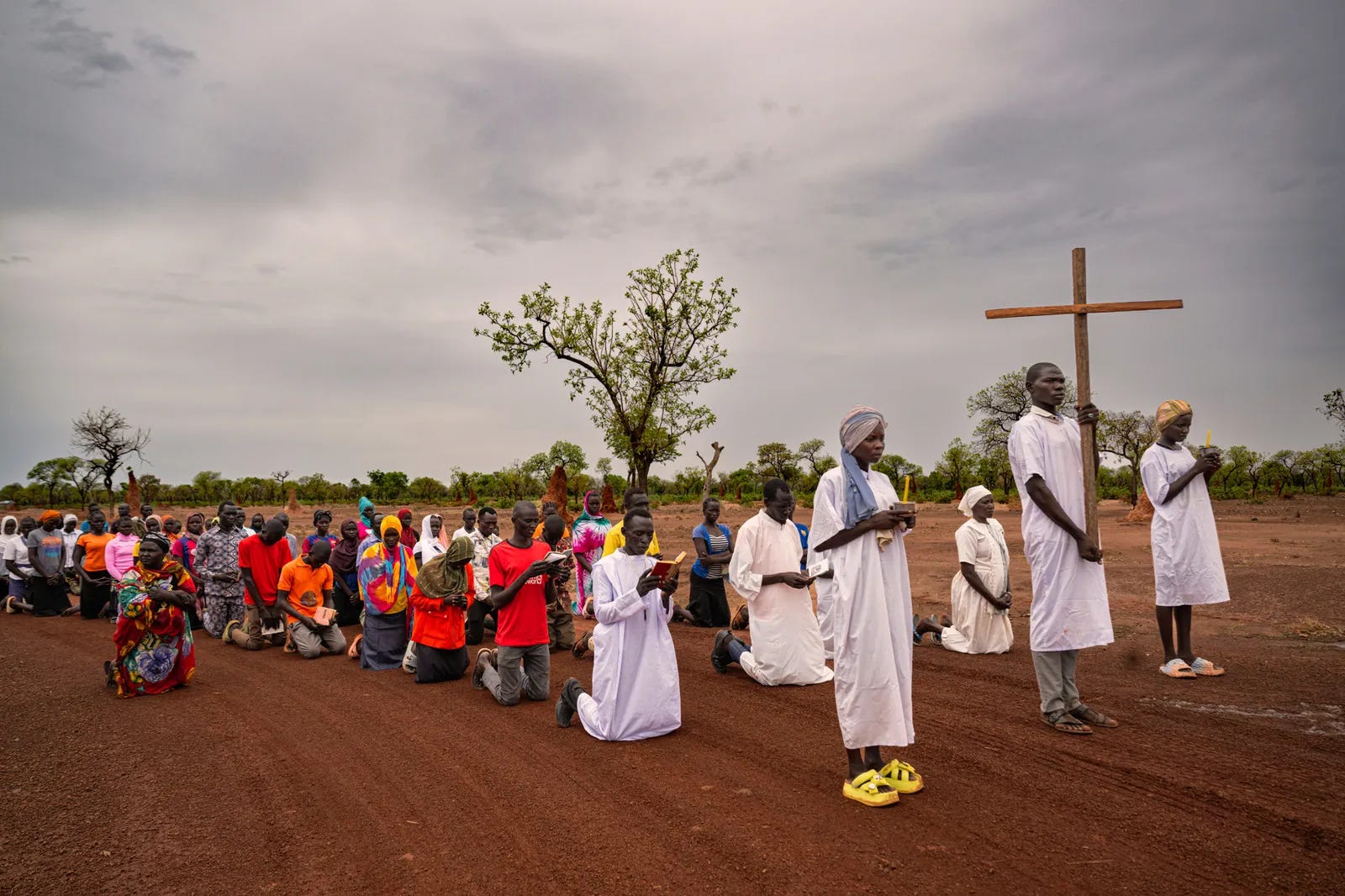
“Around 34 million Sudanese are currently in need of humanitarian assistance—that’s 72 percent of the population. About 26 million people are facing food insecurity and imminent famine has been flagged in several areas of Darfur. More than eight million children are out of school—an entire generation deprived of education. Up to 90 percent of the health care facilities are shut down. One aid worker tells me that the number of dead and displaced is so high that organizations have stopped counting. To begin our journey, Lynsey and I meet up in the middle of the night at the airport in Addis Ababa, Ethiopia, and together we sleepily board a dawn flight to Juba. Both of us are experienced war reporters with many years working in Africa. But getting inside the country is not easy. We intend to begin our journey in Port Sudan, then move to Khartoum and on to Darfur. But after months of waiting, our permission to travel beyond Port Sudan without a military escort was denied, so we decide to head for the Sudan border instead, where we know that refugees from Darfur, the Nuba Mountains, and Kordofan are fleeing in large numbers. There we hope to capture the pain and the turmoil of a new wave of violence in a war that has spanned decades. It happens to be the start of Christian Holy Week. Our small plane flies along the White Nile from Juba to Ruweng in the north, about just a few miles from the border. We fly over wetlands and savannas, small villages with mud and thatched huts where herding and nomadic families live. The plane flies low and lands at a dirt airstrip littered with the carcasses of crashed planes—noses, tails, wings, a graveyard of corroded steel in the red soil. Someone says more than 16 planes have crash-landed in the past few years. The man next to me makes the sign of the cross on arrival. When we climb into a car, a tiny child, no more than five, runs to my window and pretends to vomit. ‘He wants sympathy, he’s pretending to be sick,’ the driver says. The child watches us pull away and leave, resigned to being ignored. I see him growing smaller and smaller as we drive on in the red dust.” (Janine Di Giovani/Vanity Fair)
“Researchers analyzed DNA from 111 people buried at 19 archaeological sites across Sicily. The remains date from the fifth to the fifteenth century CE, covering the Roman period, Islamic rule, Norman rule, and later medieval centuries. The study appears in PLOS One. Sicily occupied a key position in the Mediterranean. Trade routes linked the island with Europe, North Africa, and the Near East. Armies, merchants, and migrants passed through for centuries. Historians have long known Sicily hosted Christian, Muslim, and Jewish communities. Less clear was how these shifts affected the population itself. The DNA results show a story far more complex than repeated waves of replacement. Several people who lived before the Islamic conquest already carried substantial North African ancestry. This finding points to movement across the Mediterranean long before Muslim rulers arrived on the island. Contacts between Sicily and North Africa were already shaping local populations. The team recovered mitochondrial DNA from 67 individuals and genome-wide DNA from 32 people. Those data revealed a mix of ancestries across many centuries. People buried in Islamic cemeteries between the ninth and eleventh centuries came from varied genetic backgrounds. Their ancestry linked to different populations around the Mediterranean basin. Many of those same ancestry patterns appeared in earlier Sicilian populations as well. The evidence suggests long-term connections between communities on opposite sides of the sea. The Islamic period brought signs of even wider contacts. Researchers identified individuals whose ancestry traced back to West Africa and northern Europe. These findings point to migration routes stretching across large parts of Europe and Africa. The Norman period did little to change this pattern. Christian and Muslim burial grounds continued to contain people with diverse ancestries. Religious identity and genetic ancestry did not form separate groups. Instead, people from different backgrounds lived within the same society for generations. By the Late Middle Ages, ancestry patterns began shifting toward those seen in modern European populations.” (Dario Radley/Archaeology)
“Polling in recent months has shown how deeply Trump has slipped with Hispanic voters. A March poll of 1,054 Latino adults by Florida International University’s Latino Public Opinion Forum showed 67 percent of those surveyed disapproved of Trump, with cost of living, immigration, and health care as respondents’ top issues. In April, the Pew Research Center showed that Trump had reached a second-term low approval rating among Latino voters who backed him in 2024, with a 27-point drop in approval since his inauguration. These numbers formed the backdrop for the event at which (Reuben) Gallego spoke: the inaugural Latino Vote Summit convened on Tuesday at the National Press Club. Speaking alongside the senator were Chuck Rocha and Mike Madrid, a duo from opposite sides of the aisle who have worked on campaigns for a couple decades and also host the Latino Vote podcast. They and others discussed how Trump’s problems with voters stemmed largely from their belief that he had misplaced priorities and that none included a laser-like focus on the state of the economy. Carlos Odio, co-founder of Equis Research, a Democratic-aligned group, said that Trump came into office with a grace period with Latinos, which ended thanks to a combination of flailing on the economy and over-aggressive immigration enforcement last summer … Trump may be a singular, disruptive presence in American politics. But someday some Republican will have to take his place. It’s not that Rubio is beloved—though Republicans like him a lot, and more than JD Vance. It’s that a bilingual, bicultural South Florida Cuban-American is by definition different from Trump. Gallego’s worry was that if Democrats stumbled on how they talk to persuadable Hispanics, Rubio could sell a story that recaptured them and their votes.” (Adrian Carrasquillo/The Bullwark)
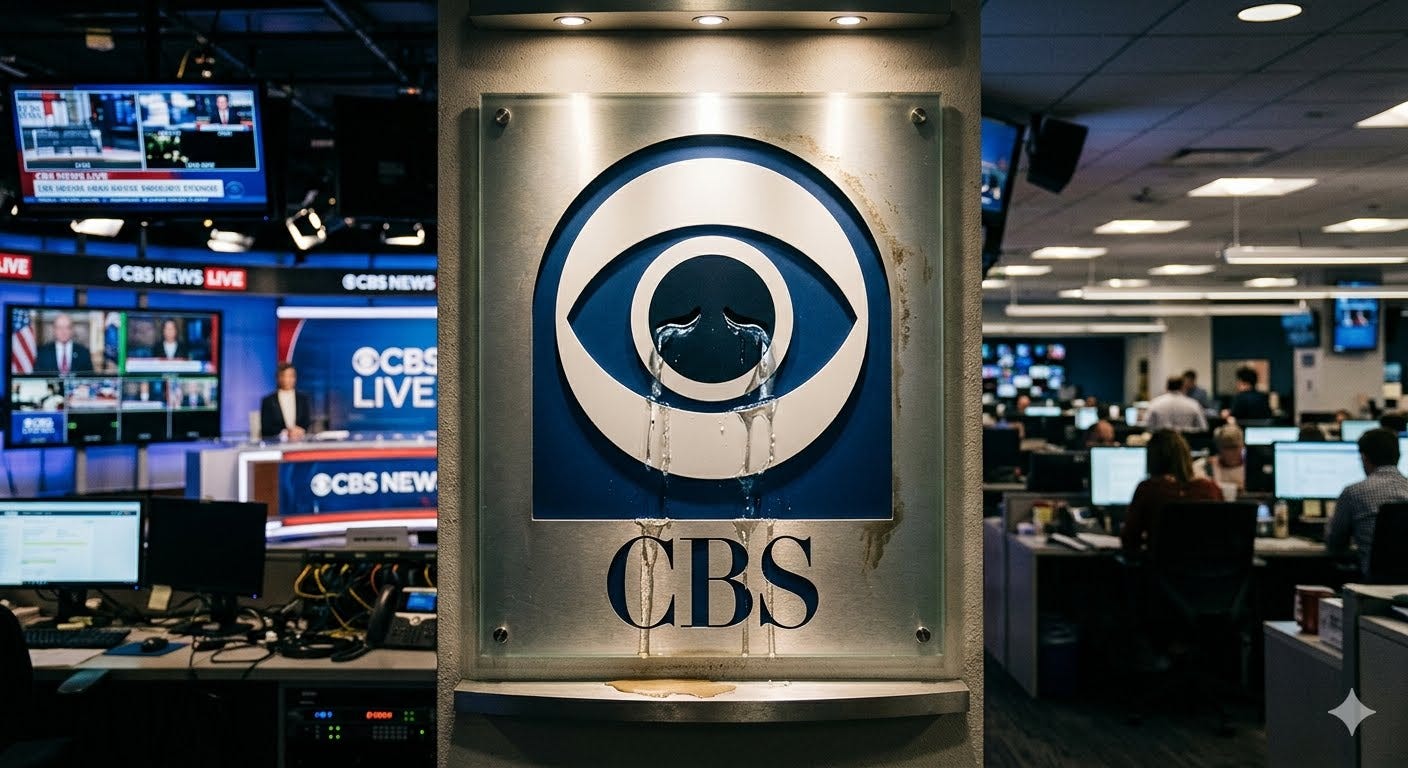
“CBS Evening News has continued to struggle with declining ratings following Weiss’s decision to appoint Tony Dokoupil as anchor, its audience regularly dipping below 4 million viewers, an important industry benchmark. CBS Mornings has also struggled with ratings since Weiss’s appointment. In his book proposal, (former 60 Minutes executive producer Bill) Owens described Weiss as ‘an opinion writer who has made a name for herself by having a lot of opinions.’ ‘In her first week at the helm, she asked each journalist to do some homework. Write a note to her about everything you are working on - her version of - what did you do over summer break, children?’ he wrote. Owens also delves into Paramount’s agreement to pay President Donald Trump $16 million to settle a lawsuit he filed against CBS over a 60 Minutes interview with Vice President Kamala Harris, which the president claimed was misleadingly edited. ‘There wasn’t a lawyer alive who believed the case had merit, and I didn’t want to set a precedent by handing over all of our interviews to the candidate who was pointing a gun at us,’ Owens wrote in his book proposal, according to Breaker.” (Isabel van Brugen/The Daily Beast via Yahoo! News)
“In recent months, President Trump, upon advice from Secretary of Defense Pete Hegseth, has relieved or forced the retirement of some of the finest officers that have ever served this nation. I have personally worked with most of them in combat. I can tell you from experience that Generals C. Q. Brown, Randy George, Jim Mingus, J. P. McGee, Dave Hodne, Jim Slife, and Joe Berger and Admirals Lisa Franchetti and Jamie Sands were war fighters through and through. And this week, in an egregious decision, the president forced General Chris Donahue to step down from his position in command of U.S. Army Europe. Donahue is without question one of the most brilliant officers I know. He is strategically focused, tactically aggressive, personally courageous, exceptionally thoughtful in his planning and execution, and compassionate with his troops. He has the respect of every man and woman who ever served with him—and you can put me at the top of that list. What is particularly concerning about these firings is the effect the dismissals will have on the officer ranks.” (William H. McRaven/The Atlantic)
“Two of the women openly emailed Epstein about recruiting for him. Both were young Russians and both received significant sums of money from – and spent considerable time with – Leon Black between 2009 and 2019, when Epstein was arrested. The women often refer to ‘Leon’ or ‘L,’ a designation that Sen. Wyden believes refers to Black, as do we. The first woman we identify as Irina Chernova. She is in the DOJ files, and Wyden has stated that Black made payments directly to her between 2009-12. That allowed us to confirm that emails to Epstein during this period referencing ‘Leon’ from ‘Irina’ were sent by Chernova. Chernova was born in 1984 in Krasnoyarsk, Siberia, and worked in television journalism. Based on the files, she appears to have recruited dozens of women for Epstein, and in 2011, introduced him to Karyna Shuliak, the Russian model and eventual dental student to whom Epstein later bequeathed his estate. In one January 2011 email exchange, he pressures Chernova to bring him new girls. Chernova was also one of the largest recipients of Leon Black’s money. According to Sen. Wyden, she received ‘hundreds of thousands of dollars’ directly from Black’s Bank of America accounts between 2009 and 2012.” (Nina Burleigh/American Freakshow)
“Too bad he missed his crowning achievement. Which is the endless obituaries in today’s news media trumpeting him and his efforts. This is what Clive Davis wanted. Acknowledgement and immortality. And to achieve that, he was on an endless quest of personal myth-making. I’m not saying the guy was without talent. He could certainly pick a Top 40 hit. And he did sign all those acts coming out of the Monterey Pop Festival. But if you look closely at his career you’ll find an endless slew of evanescent acts singing meaningless songs. They might have had commercial success once upon a time, but they’ve got no legs. Now let’s be clear, Clive Davis was the first well-known executive of the rock and roll era. Before that… It was old men in suits, possibly chomping cigars, but they were ultimately faceless to those outside the business. And then Clive Davis got fired. Now starting a few years before this, the nascent rock press started to mention his name. Fans wanted to know who was responsible for their music, and Columbia Records was the biggest label in the land. With Warner/Reprise coming up close. But Mo Ostin had a different philosophy. Sure, he started off with momentary hits, but soon transitioned to career artists, who he took a hands-off policy towards. Whereas Clive famously meddled. He thought he knew more than the acts. Despite making his bones in the album rock world, he was really a throwback to the pre-Beatle, Tin Pan Alley era. If you’re in the know, the two greatest record executives of the modern era are Mo and Ahmet Ertegun.” (Bob lefsetz)
“DSA has existed since the 1980s, but has only mattered, in a political sense, since 2017, when the followers of the 2016 Bernie Sanders campaign sought an outlet for their ambitions. Sanders had lost, but why abandon politics altogether? DSA boomed. After membership tailed off in the early 2020s, it ballooned again when Mamdani ran for mayor. They are at a new apogee, or still far away from a peak—we won’t know for a while. As long as they have a mayor who is willing to stump for them, anything is possible. Mamdani, notably, did not endorse the entire DSA slate. To appease Carl Heastie, the Assembly speaker, he remained neutral in races where DSA insurgents were directly challenging members of the Assembly. It was a move I questioned, but one that ultimately worked to Mamdani’s favor because he got everything he wanted: the insurgents, minus one, won anyway, and he got credit for delivering the victories of Valdez, Chevalier Avila, and (Brad) Lander. And it’s inarguable that his support was essential for the two women, who were in much tougher fights than Lander and had far less political experience. Espaillat does not get beaten without Mamdani. Valdez, with DSA, might have eked out a victory against Brooklyn Borough President Antontio Reynoso, but it’s hard to imagine she’s obliterating him by twenty points without the full-throated Mamdani endorsement. He cut ads for her, campaigned for her, and ensured every voter of his knew who he wanted for Congress. Mamdani brought her to the mountaintop.” (Ross Barkan/Political Currents)
“I love directing because you create the world. Sometimes, the scene could be off because of the hair or wardrobe. The devil is in the details. When I was a young actor, I was working on this educational show for PBS in Kentucky. I was in my 20s, but I was playing a 17-year-old kid that didn’t know his history and there was this older gentleman who was teaching me. We had a kitchen scene and when I got there, I saw this production design person turning the chairs over and throwing clothes on the floor. Then he took a piece of bread, ripped it apart and then did this [does a sprinkling motion] over the table. I asked what was going on and he said, ‘I’m making the ghetto.’ All the production people were white. All the other actors took their seats at the table and I just knew it wasn’t right. I went to the director and said, ‘I’m sorry, but I’m from the ghetto. We’re not nasty, we’re proud. How do I explain these crumbs to my mother, because she’s going to be watching this?’ The director saw how passionate I was and told them to clean everything up. I was shaking, but I thanked him. Afterwards, the other cast members were like, ‘That was good, man, because I felt the same way.’ At first I was like, ‘Well why didn’t you help me?’ But in that moment, I started to find my voice.” (Robert Townsend/NYT)
Really enjoyed the piece about Robert Townsend, Chicago man! Thanks for bring to my attention. Need to keep my eye open for him when I am home.