Weekend Reading
What fresh hell is this? #Incompetence #Corruption #Affordability

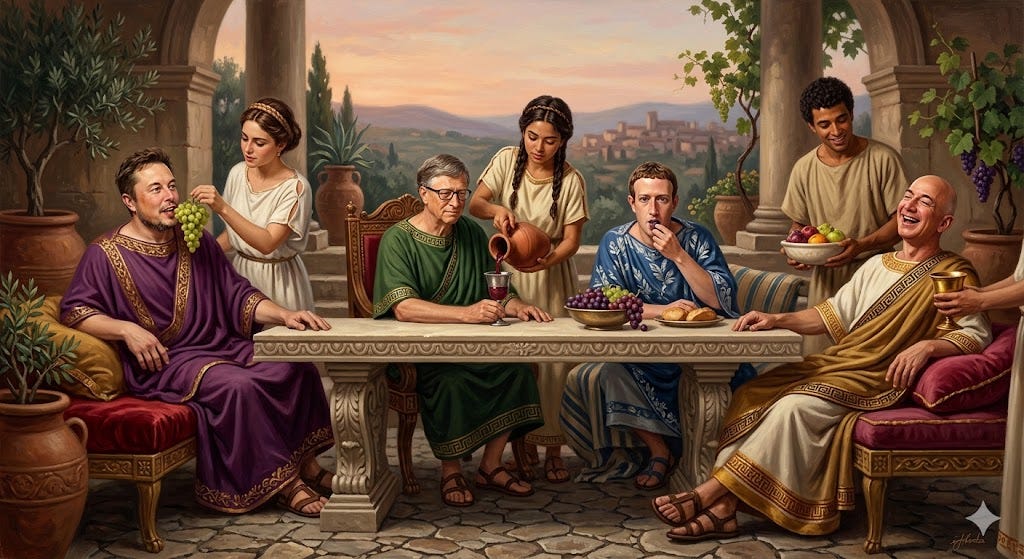
“In 2001, Barbara Ehrenreich published her classic Nickel and Dimed: On (Not) Getting By in America, in which she spent months working as a hotel maid, waitress, nursing home aide, and superstore clerk. The national minimum wage at the time was $5.15 an hour. In 2026, the national minimum wage is just $7.25. The highest state or local minimum wage, in Washington, D.C., is $17.95, all the better to serve our elected officials. More numbers to consider. The median annual income for a full-time worker in the United States is about $60,000. And a year’s forty-hour work week at the Washington, D.C., minimum wage totals $37,336, which means a full-time worker with a family of four is barely above the official poverty level of $33,000. Ehrenreich died in 2022, celebrated for her fierce understanding of American inequality. By every measure, the inequalities have gotten greater in recent years. One of these days, and probably in the not-too-distant future, one of the approximately one thousand individual billionaires in the United States will be worth a trillion dollars. So, here’s my imaginary challenge, imaginary only because I no longer commission new books, as I did for so long as a publisher. But if I still did, this would be at the top of my list: Find a billionaire willing to spend a year living on the national median income of $60,000, without access to all the splendor and resources that money provides the very rich. If there’s a literary agent involved, I’ll leave it to that person and the publisher to wrangle over the advance, to be paid at the successful conclusion of the year, plus, of course, full royalties on the books sold in print, ebook, and audio.” (Peter Osnos/Public Affairs Press)
“Colombian private military contractors, apparently hired by a United Arab Emirates (UAE)-based company, transited through UAE military bases before being deployed to Sudan to support the abusive Rapid Support Forces (RSF), Human Rights Watch said in a report released today. This is further evidence indicating that the UAE is assisting or otherwise substantially contributing to the Rapid Support Forces’ capacity to commit war crimes. The 83-page report, ‘From Bogotá to El Fasher: UAE’s Role in the Deployment of Colombian Fighters and Other Backing to the Rapid Support Forces in Sudan,’ presents evidence showing that, since 2024, the Abu Dhabi-based security company, Global Security Services Group (GSSG) hired hundreds of Colombian private military contractors who deployed to Sudan to fight alongside the RSF, which is battling the Sudanese Armed Forces (SAF). Human Rights Watch found evidence that private military contractors were in El Fasher, North Darfur’s capital, in October 2025, when the RSF took over the city and committed widespread killings and rape. The UN International Fact-Finding Mission on Sudan has said that these events bore ‘the hallmarks of genocide.’” (Human Rights Watch)
“In January, Canadian Prime Minister Mark Carney warned leaders gathered at the World Economic Forum in Davos that states caught between Washington and Beijing needed to stop negotiating alone. ‘If we’re not at the table,’ he said, ‘we’re on the menu.’ The line captured the mood of the moment … Middle powers are not becoming more visible because they are more powerful. They are becoming more visible because they are more exposed. The conditions that allowed many of them to flourish in recent decades are eroding. For years, they could shelter under U.S. hegemony, exploit an expanding global economy, and trade with rival powers without choosing among them. They could reap the benefits of scale without possessing it themselves. That world is disappearing. Growth has slowed, globalization has become a contest over chokepoints, and great powers have grown more predatory. The United States is increasingly willing to use its dominance to extract concessions. China is using subsidies and export gluts to deindustrialize other countries, debt and infrastructure to make them dependent, and military harassment and economic sanctions to narrow their choices. The result is not a flatter world of ascendant middle powers but a harsher one in which the two top powers have more ways to bend others to their will. The danger is that middle powers will respond to this new reality with symbolism instead of strategy. Summits and partnerships can create the appearance of autonomy, but they cannot substitute for raw power, which increasingly depends on the ability to finance, build, and command large systems of technology, industry, intelligence, logistics, and force. Nor can most states simply float between the United States and China, buying security from one, goods from the other, and market access from both. As rivalry hardens, hedging will start to look like betrayal. Washington and Beijing will make states show where they stand by restricting technology, rerouting supply chains, withholding intelligence, blocking investment, raising tariffs, or threatening military reprisals. In an increasingly hierarchical world, the middle is not an open marketplace. It is a minefield.” (Michael Beckley/Foreign Affairs)
“If there is any message that crystalizes the 250th anniversary of the U.S., it is not that America has changed but that Trump has changed America. There will be no snapback when he’s gone. Even as his approval ratings tank and the country is hurting, it feels as if his base has become wider and deeper and represents a new national state of mind. Tuned out on our phones, mesmerized by money porn, high on the idolatry of the big flashy win, we are getting used to the erosion of the rule of law, the threats to free speech, the banishment of government watchdogs, and the chasm of inequality. After ten years of Trump bludgeoning the first principles of the American experiment (ten because I don’t count the disappearing ink of Biden’s lame tenure when every headline was a new Trump indictment, scandal, or toxic blast from exile in Mar-a-Lago), Trump has refashioned the country in his image.” (Tina Brown/Fresh Hell)
“Underscoring his belief in the country, Mr. (Peter) Thiel, 58, has temporarily relocated his family to Argentina and enrolled his children in a local school, two of the people said. The Argentine government has also explored offering the billionaire permanent residence or even citizenship, a person familiar with Mr. Thiel’s plans said, though it’s currently unclear whether he would accept. A spokesman for Mr. Milei denied such an offer had been considered. The Argentine government is currently working to establish a ‘golden passport’ program that would allow people who make large investments in the country to obtain citizenship. ‘All billionaires of the world who want to flee countries increasingly regulated, with higher taxes and governments that persecute their citizens, are welcome in the Argentine republic, the new land of freedom,’ Manuel Adorni, Mr. Milei’s cabinet chief, said last month before congress, answering a question about Mr. Thiel. Mr. Thiel, he added, was ‘interested in the deep reforms that we are bringing forward.’ Argentina may be an unlikely place for a billionaire looking for stability. The country has careened through nearly a century of instability, marred by military coups and spectacular financial collapses epitomized by triple-digit inflation. But in Mr. Milei, Mr. Thiel has an ideological ally. The two men share an aversion for taxes, socialism and ‘wokeness’ — a negative label critics use to describe progressive politics. Since becoming president in 2023, Mr. Milei has sought to overhaul Argentina’s economy, pushing sweeping deregulation and government spending cuts. He has sought to attract foreign investment in the country’s natural resources, including oil, lithium and rare earth minerals.” (Emma Bubola and Ryan Mac/NYT)
“The March 31, 2026 release of a World Bank policy research report sympathetic towards industrial policy caused quite the buzz in development circles. Such a report has been a long way coming since the infamous 1993 misreading of the core drivers of East Asian economic takeoff; as well as countless efforts to stifle ambitious context-based policymaking before that. As most commentators on the report have already noted, the intellectual and empirical justifications for industrial policy are decades old, and includes lots academic/policy giants that were previously ignored by the Bank and the broader international development community. Better late than never, I guess. This is post is not about the report itself (it’s a good primer on industrial policy for those unfamiliar with the concept), but mostly about what the World Bank (as well as donors and other multilaterals) might do with the recommendations in the report (and how policymakers in low-income countries should respond). So why now? A cynical read of the situation might be that this is yet another instance of the World Bank as an institution (as opposed to the actual authors of the report) externalizing the dominant intellectual/policy orthodoxy among its most powerful shareholders. Industrial policy was bad when low-income countries were dabbling in it to accelerate their processes of catch-up development; but it’s now fine because certain high-income countries have reasons to do it more aggressively and openly (they’ve always done it, anyway) to compete with China.” (Ken Opalo/Africanist Perspective)
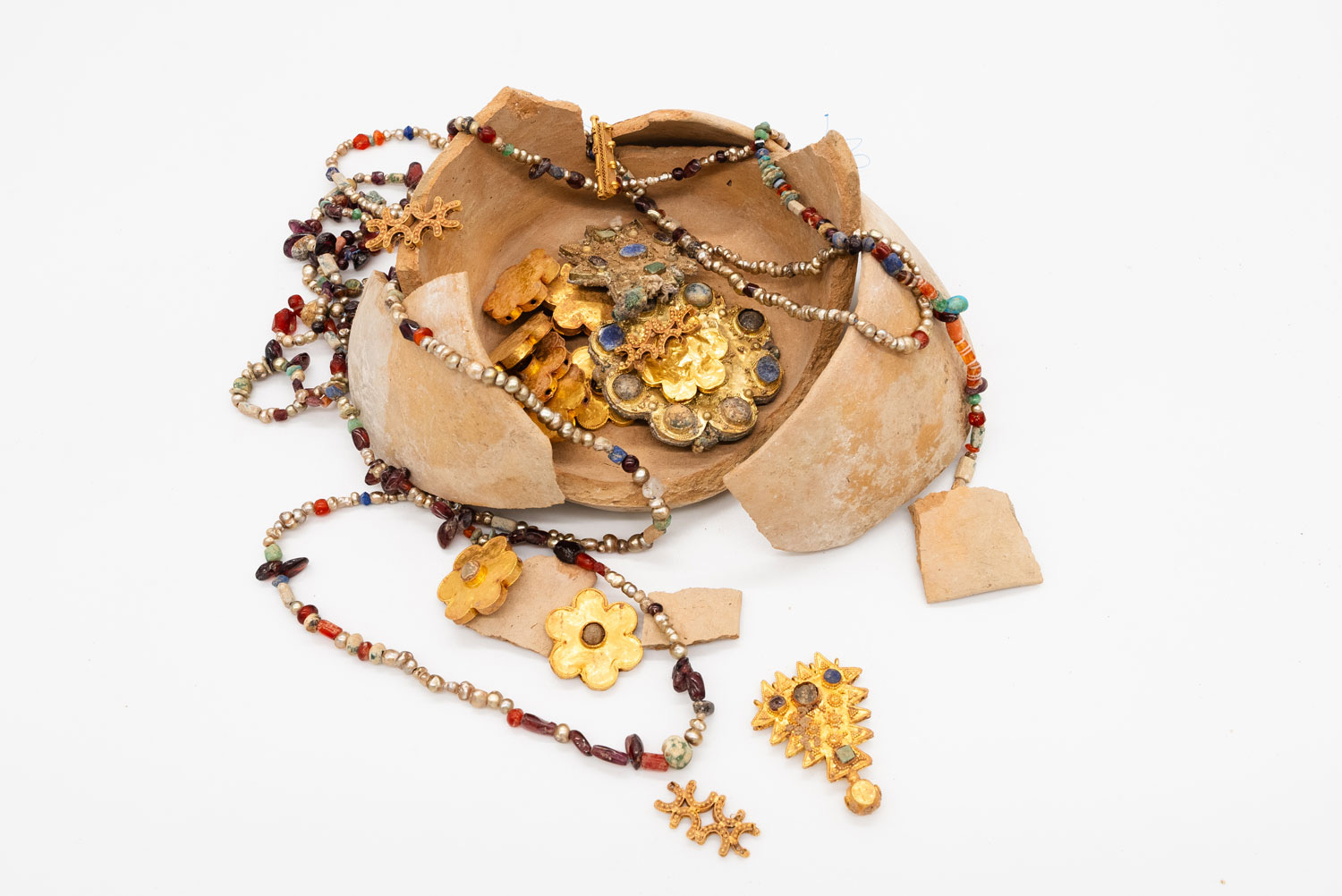
“A collection of more than 100 gold, silver, and gemstone jewelry pieces stored in a ceramic jar was discovered in Diriyah, a settlement that was once a stop on the route that connected Basra in southern Iraq and Mecca on the west coast of Saudi Arabia more than 1,000 years ago, according to a Live Science report. Pilgrimage to Mecca, a trip known as the hajj, is considered a religious duty for adult Muslims who are physically capable of making the trip and financially able to do so. Excavations at the site of Diriyah, conducted by archaeologists from the Saudi Heritage Commission, have uncovered gypsum water basins and the remains of residential buildings. Inside the buildings, the researchers discovered fragments of pottery, glass, and the collection of jewelry. Organic remains from the settlement have been dated to between A.D. 743 and 753. The hoard is thought to have been buried during the Abbasid Caliphate, which was established in A.D. 750 and ended in 1258 with the evasion of the Mongols.” (Archaeology)
“Standing in front of the most powerful and well-known people in the television news business on Wednesday night, in a glitzy New York City ballroom, 18-year-old high school student Santiago Campos shocked – but also delighted – many in attendance when he called out the network that funded the scholarship he received: CBS News. Campos, a graduating senior at the District of Columbia international school who had traveled to New York for the 47th annual news and documentary Emmy awards with his mother and teacher, was awarded the Mike Wallace memorial scholarship, honoring the legendary television interviewer. Campos was given the award by veteran 60 Minutes correspondent Scott Pelley, who said: ‘Mike would see something of himself in this year’s recipient.’ While Campos thanked CBS News for funding the $10,000 grant, he launched into a critique of the network’s direction under editor-in-chief Bari Weiss and owner David Ellison. ‘I want to also acknowledge how the recent direction of the outlet stains the legacy of Mike Wallace, the namesake of this scholarship,’ he told the crowd.” (Jeremy Barr/The Guardian)
“In 2013, then-Florida Attorney General Pam Bondi personally solicited a $25,000 political donation from the Donald J. Trump Foundation for her re-election PAC – and soon received it. Days later, Bondi’s office abandoned plans to join a New York lawsuit investigating fraud allegations against Trump University. It is against the law for charitable foundations to make political contributions. But in the universe of Trump corruption, $25,000 was laughable chump change. It just proved to him how cheaply Pam Bondi could be had. Fast forward a few years. Bondi, no longer in elected office, got serious about money as a $115,000-a-month lobbyist with the DC-based influence giant Ballard Partners. Her client list included deep-pocketed private prison corporations and the government of Qatar (for whom she was specifically registered under the Foreign Agent Registration Act for ‘dealing with matters pertaining to combating human trafficking’). When Trump nominated her to be his attorney general in early 2025, she didn’t bother mentioning those clients in her statement of potential conflicts of interest. So far so good: lies and omissions are standard operating practice in Trumpworld. His initial pick for attorney general was Matt Gaetz, who might have been a more fitting choice to oversee the Epstein cover-up, having himself been investigated for child sex trafficking and found to have violated Florida’s statutory rape laws according to the House Ethics Committee. Gaetz had skated on all of it, but was ultimately too tainted even for the slavish Senate Republican majority that would have to approve the nomination. Still, Bondi was something of an unusual choice for a Trump casting.” (Nina Burleigh/American Freakshow)
“The post-Trump era will not be a blank canvas for policy makers. To be clear, it will demand a great deal of legislating, bureaucratic deftness, technical knowhow, and creativity. Assembling a new government will need to be undertaken with an eye toward avoiding obvious pitfalls, which will of course place policy expertise at a premium. But the governing machinery all these operatives expect to be awaiting them will be broken. The challenge will be to get a new apparatus up and running quickly, which will in turn require blowing through obstacles—the procedural ones that have been there all along, and the landmines that will be strewn about by saboteurs. A hodgepodge of detailed policy objectives is not responsive to that challenge. Not even if the policies tick all the right interest-group and message-testing boxes.” (Brian Beutel/Off Message)
“The US Justice Department is seeking the names, addresses, and banking information of Reddit and X users, ratcheting up efforts to identify social media critics of government deportation efforts. The US Attorney’s Office for Washington, led by Jeanine Pirro, a close ally of President Donald Trump, has subpoenaed the social media companies as part of criminal investigations, asking for personal information on at least two anonymous posters behind accounts that have chided immigration enforcement efforts, according to records shared by attorneys for the users. The anonymous users, who learned of the subpoenas from the platforms and hired lawyers to challenge the government’s demands for information, haven’t been told what possible offenses are being probed. Their lawyers believe the investigations could relate to allegations of revealing a federal officer’s location data or other types of perceived threats, but dispute that their clients committed crimes. Even if no charges ultimately are filed, the attorneys contended in interviews that rooting out identities of dissenters is at the very least an intimidation tactic.” (Jimmy Jenkins and Zoe Tillman/Bloomberg)
“To understand why people are so miserable about the economy, look no further than Thursday’s report on gross domestic product. Not how much GDP grew, but how it was divvied up. Worker compensation—wages and benefits—grew 0.8% in the first quarter from the fourth, while domestic corporate profits jumped 2.7%. As a result, labor’s share of gross domestic income (conceptually similar to GDP) sank to 51%, the lowest since records began in 1947. Profits’ share climbed to 12.1%, the highest since 1950. It’s the latest milestone in a trend that became pronounced in the 2000s, then picked up speed after the pandemic. Adjusted for inflation, hourly wages are up 3% since the end of 2019 while profits are up 50%. That, in a nutshell, explains the chasm between an ebullient stock market and anxious public … There is no sign of those trends reversing. For instance, the recent surge in energy prices left after-tax disposable income, adjusted for inflation, lower in April than in December. Meanwhile, profits of energy companies in the S&P 500 are expected to double this quarter from a year earlier, according to FactSet. And the AI gold rush is still in full swing. In coming months three companies closely associated with AI—SpaceX, Anthropic and OpenAI—plan to go public. None are profitable (though Anthropic is close), but valuations of around $1 trillion each attest to the profits investors think await.” (Greg Ip/WSJ)
“On a low-pollution Sunday last December, the weekend before Christmas, I headed to People’s Park on Shanghai’s Nanjing Road to visit the city’s so-called marriage market: a cluster of footpaths and lawns in the park’s northwest corner, where hundreds of parents gather each weekend to matchmake their unmarried adult children. It was the winter solstice: a particularly auspicious occasion this year, as an aunt had written to our family’s thirty-one-person WeChat group—a day on which it was said that heaven and earth would reunite … I entered the park through a western gate, next to which a Starbucks played Mariah Carey and Willie Nelson. The market emerged suddenly: crops of middle-aged Chinese huddled around laminated advertisements that littered the ground or were clipped to trolley bags and music stands. The otherwise quiet grounds, within these few thousand square feet, were beginning to teem with brokers and visitors alike. Fleece-clad aunties lined the shrubbery; raincoated uncles smoked under the wutong trees. I slipped into the sparse flow of people that circled the gardens and moved through sheltered walkways … The first uncle I saw stood on the outskirts of the market, a few yards before a long archway that drove deeper into its heart. Bald and stocky, he wore sweatpants and hiking boots. One hand was tucked into his pocket. He used the other to nurse a cigarette. A dozen listings were spread at his feet. These were bare-text summations of vital information: gender; education level; age, via birth year; height, and sometimes weight; employment status and occupation; income; hukou status, which granted residence and access to health care, education, and housing within a given region; property holdings (owned or rented? number of bedrooms? car?); parent profiles (pensioned? healthy or ill?); debt, or lack thereof; vices (smoking, drinking), or lack thereof. A few listed hobbies or a Chinese zodiac sign. The faceless prospects on offer were probably playing video games at home or hanging out with their friends. It was common knowledge that the matches themselves were generally uninvolved and uninterested in their parents’ schemes, that young people in Shanghai were dating on their own in all sorts of ways, both online and in person.”(Becky Zhang/The Paris Review)