
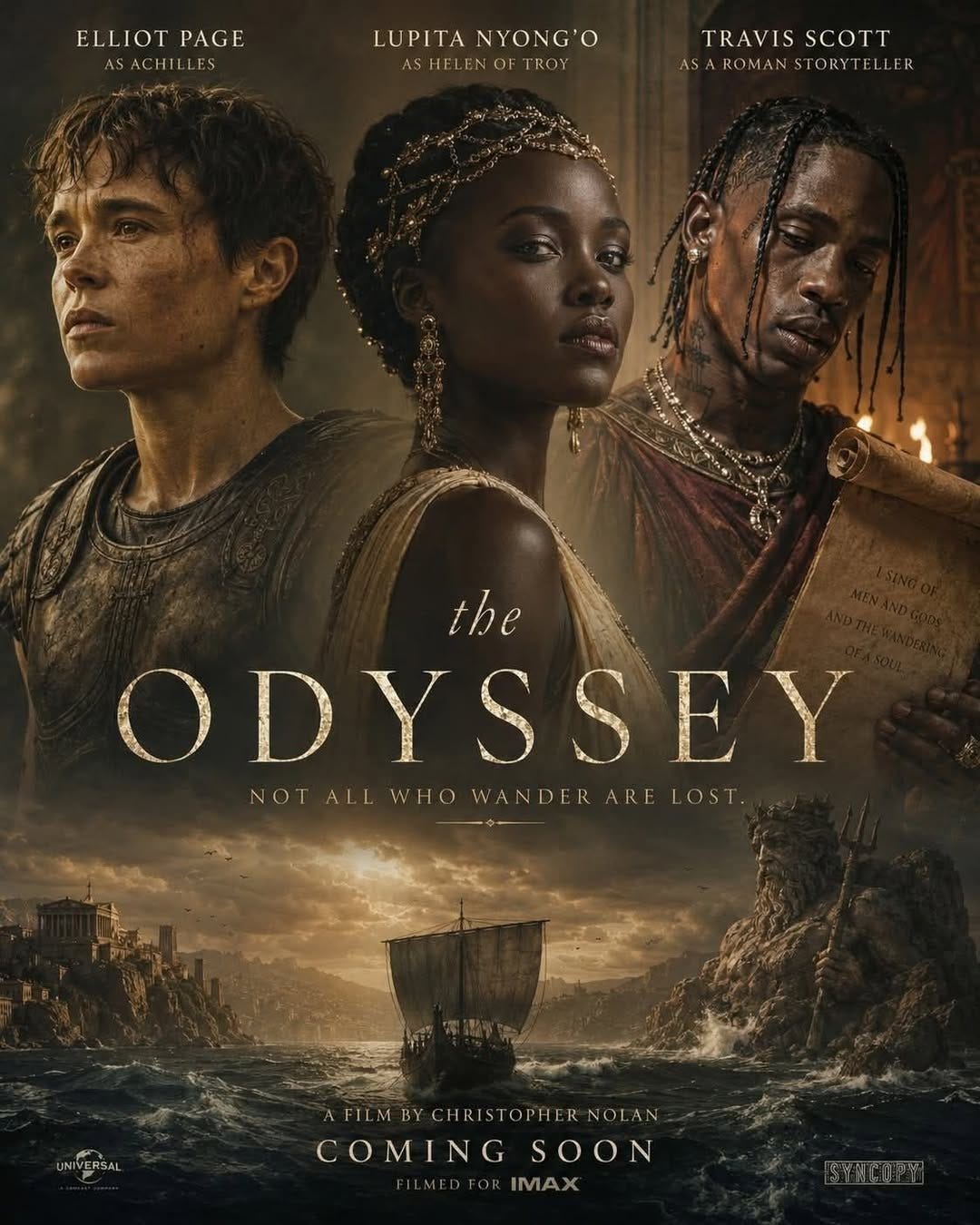
Who would have thought that the tensions in academia between traditional classical scholarship and modern classical archaeology would express themselves in public and on iMax. Historically, classical scholarship has operated top-down, privileging the political, philosophical, and military narratives left behind in the Great Books of Western Civilization by the ancient world’s overclass. Plato; Xenophon; Aeschylus; Solon; Thucydides. To the manor born, each and all. Because they were literate and men as well as brilliant. Their voices were allowed to be a part of the historical record. And while an ancient bard like Homer was probably not of the ruling class, per se, his most excellent oral poem was allowed to proliferate and became a fixture of the Greek civilization because it reflected the weltanschauung of the aristocratic class.
But there is more to the reality of a people and of an historical era than the literate ruling class, despite what Edwardian classical scholarship and its conservative admirers would like us to believe. Enter: archaeology’ particularly, modern archaeology. By contrast, modern classical archaeology includes — how else does one put it? — the rest of society. Agrarian laborers; Women; the so-called “barbarians.” People that actually existed. Merchants and tradespeople and travelers. People — that for some reason or other — conservatives would rather us not listen to, but that frequented ancient Mediterranean society as foireigners.
There is quite a bit of this in the conservative freak-out. There is also the anti-woke claim by right-wing influencers that the casting is not just overreach, but an attempt to multiculturally degrade our common understanding of ancient Greece. That the roles of Greeks should be played by Greeks — or (sotto voce), at the very least, by white men that can pass for Greek.
For some reason — perhaps anti-Modernism — this aversion of the projection of diversity in any of the great literary works of the West has not infiltrated Shakespearean scholarship. For four hundred years, Shakespeare play performances have involved cross-dressers, black-playing-whites and, further, whites-playing-Othello. This is largely a result of the fact that in the time of the Great Bard, women were not allowed to play women’s roles. And, further, there is actual gender confusion in the content of Shakespeare’s plays themselves. So — there’s that. Shakespeare is naught else but problematic to white, male supremacist thinking. But back to the Great Greek Freakout. From Paul Glastris in The Monthly:
When Nolan confirmed that Lupita Nyong’o would play Helen of Troy, Elon Musk accused the director of “desecrating” Homer to win an Oscar, and conservative commentator Matt Walsh called him “a coward.” The fixation on Nyong’o’s race was, of course, just racism. The ancient Greeks knew of and traded with Black Africans, whom they called Ethiopians, and Homer himself praised their virtues. A Black Helen of Troy is hardly more of a stretch than a man of English and Nordic descent, Matt Damon, playing Odysseus. Still, other Nolan choices, such as casting trans actor Elliot Page as the Greek soldier Sinon, convinced conservatives—who pride themselves on being more in touch with ordinary Americans than liberals are—that The Odyssey would flop. “Nobody is going to go see this woke movie, and it’s going to be a box office bust,” predicted Newsmax commentator Katie Zacharia.
Then the movie came out. Suddenly, conservatives had to contend not only the fact that it brought in more revenue in one weekend ($264 billion) than it cost to make ($250 million), but that, as Ben Shapiro conceded after watching it in IMAX, “it’s really, really, really good.”
In moments like this, when ideologues are mugged by reality, a period of adjustment ensues as political allies attempt to get their story straight. We are in that sort of moment now.
As one of the foundational “Great Books,” there have been many telling’s of The Odyssey over the years. Just as there have been many multiracial and gender role-flipping iterations of Shakespeare over the years on both stage and screen. All rely on something called suspension of disbelief, which prioritizes narrative over casting or even timeline. The conservative unwillingness to temporarily abandon practical skepticism and accept fictional premises in order to universalize the story is on-brand and, quite frankly sad. It speaks to the poverty of the conservative imagination.
Not all of the Odyssey film renditions are as closely hewn to the text as Christopher Nolan’s. There was the Coen Brothers “O Brother Where Art Thou?” which, just as Kenneth Branaugh’s well-reviewed “Much Ado About Nothing,” was fuzzy enough on the narrative so as to not cause the right to go into conniptions while oscillating wildly. This is probably because Branagh's Much Ado announced itself at the outset as a modern re-interpretation of the story. As “West Side Story” is of “Romeo and Juliet,” which, similarly, no one thought of as overly woke (though, to be sure, most of that cast was not Nuyorican).
That having been said, anti-woke hysteria — like anti-political correct hysteria in the late 80s/early 90s — far surpassed in intensity and volume the forces of inclusiveness. Instances of artistic wokeness — few and far between during this administration — have tended to be overwhelmed by its anti-wokeness by a factor of infinity. Smothered in the cradle. Like the all-female Ghostbusters and, most recently, Supergirl.
Neither Supergirl nor Ghostbusters were part of the Western literary cannon, however. Or, to be more precise, of the Great Books. Which adds another layer of complexity to the matter. That the Western Cannon must remain racially pure is hinted at, but not ever formally stated. The implication is clear, though. These are no longer “the Great Books,” collective wisdom belonging to all of us by virtue of our shared human condition. They are — to the populist right — “The Western Cannon,” racialized, monuments in paper to the greatness, past, present and future of a white patriarchy that prefers the study of business.
Someone once asked David Duke, the founder of the NAAWP, an organization that shares culturally overmuch in common with Trump, 2.0, what he loved most about Western Civilization. I remember Duke said he loved Hegel and Mozart, which in retrospect seems somewhat doubtful. And there was, as you might imagine, no journalistic follow-up question. I would hazard to guess that most of the “purists” of classical scholarship in the case of American summer film renditions have probably not done a thorough reading of The Odyssey, just as David Duke is probably not whistling The Queen of the Night aria, like, ever, or, for that matter, re-reading his favorite passages of Phenomenology of the Spirit. Still, his cultural influence endures.
Much has been made of Matt Damon’s Odysseus. Laden with an angst that is more Modern than Ancient. To which, Glastris continues:
Matt Damon’s character is tormented not because he’s exquisitely sensitive but because, in Nolan’s rewriting of the epic tale, the hero sees the consequences of his actions in ways informed by modern understandings. Near the end of the movie, Odysseus explains to his wife Penelope (played by Anne Hathaway), that the siege and sacking of Troy was not about retrieving Helen but about wresting control of trade routes. As he speaks, he suddenly realizes that he and his comrades are the “people of the sea”—the rumored and much feared invaders whose lawless attacks threaten the whole of society. The dialogue in that scene channels modern scholarship suggesting that the fall of the Greek Mycenean civilization depicted by Homer was the consequence of disrupted trade and mounting warfare within and between fortified cities, all of it likely accelerated by natural disasters such as earthquakes and long-term droughts.
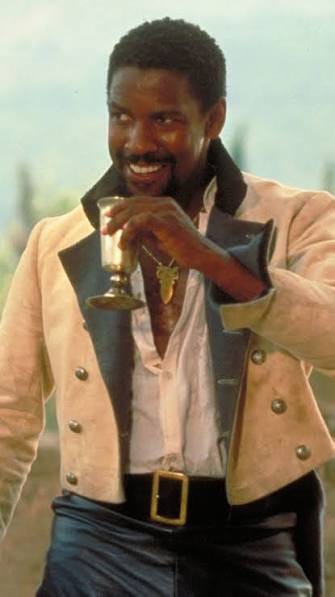
The Mycenaean overextension argument notwithstanding, what makes this so wrong? Why can’t an ancient character be portrayed as having more “modern” emotions when reinterpreted in a medium other than papyrus and the oral tradition? Or are all forms of classical literature to be interpreted with what can only be properly construed as “original intent”? Are only Gods — or, really good looking white Mediterranean men — supposed to play Gods? Why can’t we treat Homer with the same grace that we have traditionally Shakespeare? The world did not end when Denzel Washington played Don Pedro in Much Ado About Nothing. Shakespeare and human genius belongs to all humanity. Jane Austen is probably nearly as popular among schoolgirls of every race that read her as she is to the British. Her value to humankind is greater than her value as an “avatar of her race,” as the populist right would have it. The world did not conclude because Lupita N’Yongo played Helen. Rather, The Odyssey has reached more people, and will continue to reach more people, because its director acknowledges the truism that the cathartic effects of tragic drama are not limited to Athenian elites.